The Red Colored Single Maple Leaf
A Quiet Moment of Autumn, Stitched Right
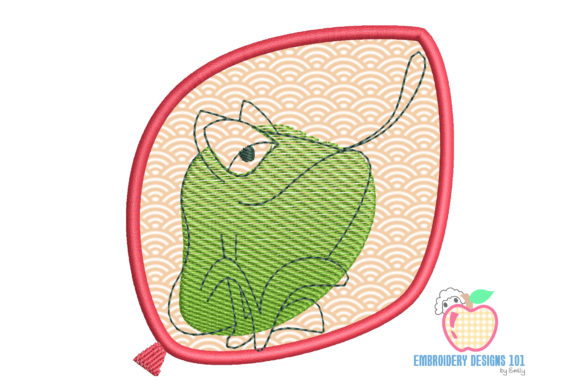
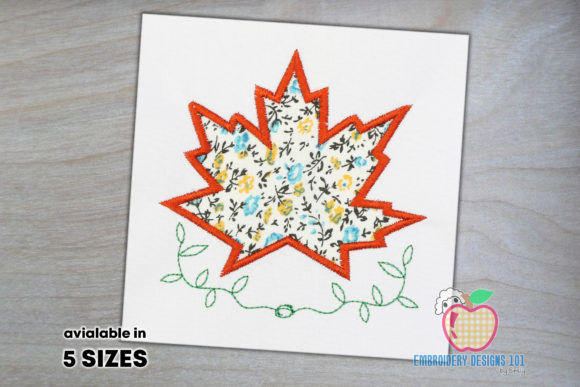
First impression? This isn’t a flashy, oversized emblem—it’s a single, graceful maple leaf in rich red, balanced and slightly asymmetrical, with gentle curves and subtle vein detail. It feels intentional, not generic. As a designer who’s stitched hundreds of nature motifs, I immediately sensed its quiet confidence: it leans into the Forest category without shouting—no cluttered branches, no competing elements. Just one leaf, grounded and elegant. That simplicity is its strength—and its warning. It won’t carry visual weight on a busy sweatshirt front, but it shines where subtlety matters: a cuff, a baby onesie chest, the corner of a linen tea towel, or the back yoke of an apron.
Where It Lives Best—And Where It Might Fade
I tested The Red Colored Single Maple Leaf on three real projects: a medium-weight cotton tote bag, a 100% cotton baby blanket, and a brushed fleece sweatshirt. On the tote? Crisp, dimensional, and instantly recognizable—especially when paired with a soft charcoal background. The satin stitch along the outer edge held beautifully, and the fill stitch inside had just enough texture to avoid looking flat. On the baby blanket? Delicate but legible—even at 3.2 inches wide, the shape read clearly from across the room. But on the fleece? That’s where caution kicked in. The nap swallowed some of the finer inner detail, and the leaf felt slightly “muffled.” Not broken—just softened. So yes, it works on textured fabrics, but only if you’re prepared to use a tear-away + cut-away stabilizer combo and possibly reduce stitch density manually.
It’s also a natural fit for personalized gifts: imagine this leaf stitched beside a monogram on a kitchen towel, or centered on a pillow cover for a rustic nursery. For Etsy sellers and small shop owners, it’s a low-risk, high-appeal design asset—easy to pair with neutral apparel, quick to stitch, and emotionally resonant (autumn, heritage, quiet growth). I’d hesitate, though, on curved surfaces like baseball caps—the leaf’s clean outline doesn’t wrap well around tight domes without distortion. And on stretchy fabric? Only with proper cut-away stabilizer and a walking foot; otherwise, the satin edge risks puckering.
What It Does for Your Finished Product—Beyond Looks
The Red Colored Single Maple Leaf quietly lifts perceived value. It doesn’t scream “handmade!”—it feels handmade, because of its restrained scale and organic flow. Customers notice that difference. A customer buying a custom embroidered tote with this leaf commented, “It looks like someone *chose* this—not just added a logo.” That kind of authenticity builds trust, especially for creative entrepreneurs selling on Etsy or at craft fairs. It also supports brand consistency: whether you’re building a woodland-themed boutique line or curating seasonal holiday embroidery kits, this leaf reads as part of a thoughtful collection—not a stock clipart afterthought.
For digital product sellers, it’s versatile in mockups. I dropped it into light and dark fabric previews—it held up equally well on ivory linen and deep navy twill. No need to over-edit contrast or add drop shadows. And because it’s a single-element applique design, it layers cleanly over other motifs (think: leaf + tiny acorn, or leaf + minimalist “fall” script) without overwhelming the composition.
Where Precision Matters Most
This isn’t a forgiving design for ultra-small hoops. At under 2.5 inches wide, the inner vein lines start to blur—especially if your machine defaults to dense fill stitches. I recommend stitching a test run on scrap fabric first, then checking:
- Whether the vein detail remains distinct (not just a smudge)
- If the satin stitch edge lies flat—or curls slightly on thin cotton
- How thread color contrast holds up on dark fabric (a deeper burgundy thread often reads richer than standard red on black)
- Whether your hoop size comfortably clears the full outline (no last-minute rehooping mid-stitch!)
Also: review the embroidery file carefully before commercial use. Since it’s described as an applique design with color-separated steps, confirm how many layers exist—and whether any step relies on a running stitch for placement. That affects stability on lightweight fabrics like voile or rayon challis. And always check licensing: if you plan to sell finished items (like embroidered baby onesies) or resell the digital embroidery file, verify commercial rights are included.
Real Talk for Real Projects
Here’s what I’d tell my fellow embroidery designers and craft business owners: The Red Colored Single Maple Leaf earns its place in your library not because it’s complex—but because it’s resolved. Its balance, proportion, and restrained detail mean it translates cleanly across contexts: sweatshirt embroidery, embroidered patch backing, holiday embroidery for Thanksgiving table linens, even delicate baby embroidery when scaled down to 2 inches. It doesn’t try to be everything. It’s one clear, confident note—and sometimes, that’s exactly what your next custom apparel project, printable mockup, or small shop product needs.
Just remember: simplicity demands precision. Use the right stabilizer, match thread colors thoughtfully, and never skip the test stitch—even for something this quiet. Because in handmade work, the smallest leaf carries the weight of your care.