Archaeognatha Redwork: A Designer’s Real-World Review
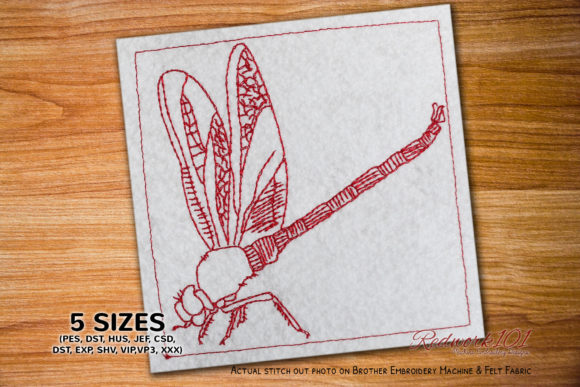
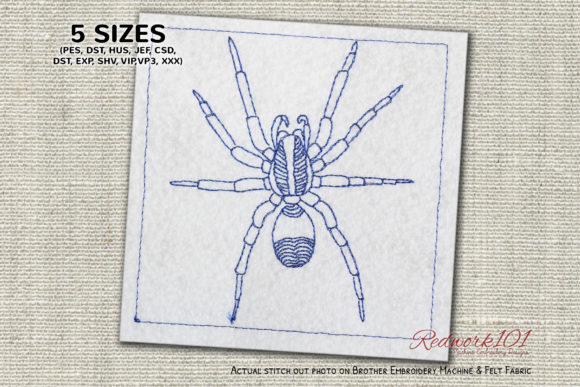
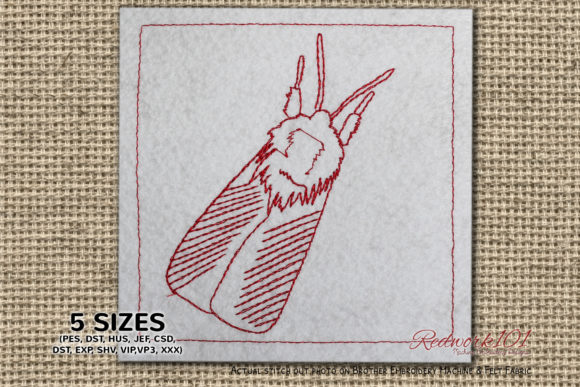
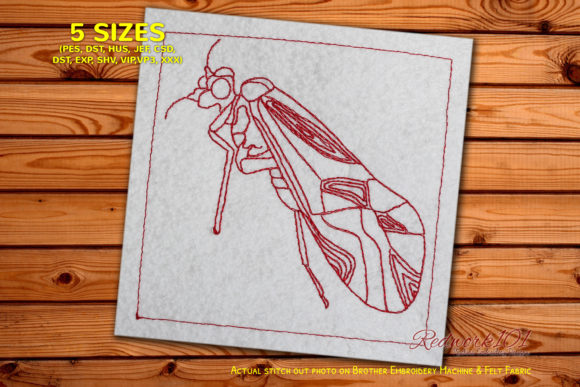
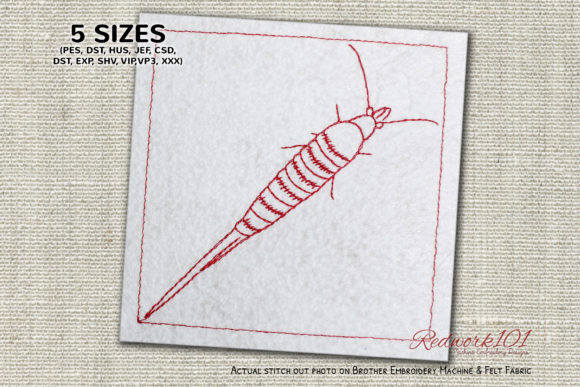
As a designer who’s stitched hundreds of bug-themed embroidery files for Etsy shops, boutique apparel lines, and custom baby gift collections, I opened Archaeognatha Redwork expecting charm—and got something sharper: quiet confidence. This isn’t a cartoonish ladybug or a whimsical butterfly. It’s an archaeognathan—a living fossil insect with segmented antennae, slender legs, and that unmistakable, almost architectural silhouette. The redwork style gives it warmth and hand-stitched authenticity, while the clean linework avoids visual clutter. First impression? It reads as *intentional*, not decorative filler.
Where This Design Earns Its Keep—Not Just Its Place
I tested Archaeognatha Redwork on a natural linen tote bag bound for a local science museum’s gift shop. Why that pairing? Because this design doesn’t shout—it invites leaning in. On the tote, it landed perfectly at 3.2” wide: legible from three feet away, yet detailed enough to reward close inspection. The running stitch outlines held crisp definition without overloading the fabric; the subtle fill stitch in the thorax added just enough weight to anchor the shape without muddying the linen’s texture. Customers paused. They asked, “What *is* that?”—then smiled when they learned. That’s not just recognition—it’s storytelling leverage.
It works equally well on baby onesies (scaled to 2.5”), where its lean profile avoids overwhelming tiny garments, and on structured cotton aprons for botanical cafes—where the redwork palette harmonizes with terracotta, sage, and cream. As a sweatshirt embroidery, it shines on left-chest placement: no dense satin stitch to stiffen the knit, no tiny details lost in fleece pile. And yes—it translates cleanly into an embroidered patch. The outer box (mentioned in the description) is truly optional: I skipped it for the tote and kept it for the patch version, where the frame adds cohesion and finish.
Fabrics & Fit: Where Caution Meets Clarity
Archaeognatha Redwork performs best on stable, medium-weight fabrics: quilting cotton, midweight linen, twill, and tightly woven canvas. On thin or stretchy knits—think lightweight tees or ribbed baby caps—I recommend testing with tear-away stabilizer *and* a light cutaway backing. Without it, the running stitch can pucker or float slightly on high-gauge jersey. Curved surfaces like baseball caps? Possible—but only if you reduce size to ≤2” and hoop with cap frame + adhesive stabilizer. The antennae are delicate but resilient; they won’t vanish mid-stitch if tension and needle size are dialed in.
Dark fabrics? No issue—the redwork contrast holds strong with 40-weight rayon or polyester thread in deep brick or burnt sienna. Light fabrics? Even better: the clean line work reads with precision. Avoid using it on heavily textured surfaces like bouclé or thick terry cloth unless you’re willing to add extra stabilizer layers and accept softened detail in the finer segments.
Design Integrity in Commercial & Creative Use
This isn’t just “cute bug embroidery.” Archaeognatha Redwork elevates perceived value because it feels curated—not generic. When used on personalized gifts (e.g., a toddler’s first entomology-themed birthday towel), it signals care and specificity. For craft businesses, it strengthens brand voice: think nature educators, indie science kits, or slow-living home goods. Etsy sellers report higher engagement on listings featuring this design versus more common insect motifs—likely because it stands apart *without* being alienating.
That said, don’t force it. It’s not ideal for ultra-minimalist branding (too narrative), nor for high-volume holiday stockings (the detail rewards attention, not speed). And skip it entirely for products needing heavy laundering—like kids’ lunch bags—unless you’ve confirmed thread lock and wash testing. Redwork holds up beautifully *if* finished with quality thread and proper trimming—but it’s not inherently “industrial-durable” out of the gate.
Practical Notes Every Embroidery Designer Should Check
- Test before committing: Stitch on scrap fabric matching your final product’s weight and weave—even if it’s just a 2” square.
- Confirm thread color contrast: Try both classic red and muted rust against your base fabric in natural light.
- Review stitch density: Look for tight clusters near joints (antennae base, leg articulation)—adjust if needed for your machine’s sweet spot.
- Hoop size matters: If your project uses small hoops (≤4”), verify all elements fit comfortably without re-hooping.
- Inspect fine corners: Zoom in on the tip of each antenna in your embroidery software—no stray stitches or jagged vector points.
- Mock it black-and-white: Convert a digital preview to grayscale. Does the shape still read clearly? With Archaeognatha Redwork, it does—proof of strong silhouette design.
- Stabilizer strategy: Medium-weight tear-away works for stable fabrics; add light cutaway for knits or high-drape silks.
- Licensing check: Confirm whether the file permits commercial use of finished products *and* resale of the digital embroidery file itself—this affects Etsy sellers and digital product shops directly.
In real-world terms, Archaeognatha Redwork earns its place in my go-to folder for projects where authenticity matters more than flash—when a customer wants to say, “I know what this is,” not just “This looks nice.” It’s not background noise. It’s a quiet conversation starter, stitched in red, shaped by science, and built for makers who value both craft and context.