Golden Dragon Embroidery Design Review
As a designer who’s stitched hundreds of animal motifs—from delicate foxes to bold eagles—I opened Golden Dragon with genuine curiosity. Not just “Will it stitch?” but “Will it *land*? Will it feel intentional, balanced, and worthy of the time, thread, and customer trust invested in a handmade product?” Spoiler: it does—but not without thoughtful context.
A First Impression That Feels Like a Story
The Golden Dragon isn’t cartoonish or overly stylized. It carries weight—literally and visually. The pose suggests motion without chaos: coiled tail, lifted head, subtle curve of the spine. There’s no forced aggression or cutesy simplification. Instead, it reads as mythic, grounded, and quietly powerful—a design that belongs on a well-made pillow cover for a meditation nook, not a toddler’s onesie (more on that later). Its layout is naturally horizontal, with moderate height-to-width proportion—ideal for center-chest placement on sweatshirts or vertical flow on tote bags.
Where Golden Dragon Shines in Real Projects
I tested Golden Dragon on three real-world items: a heavyweight cotton canvas tote, a midweight French terry sweatshirt, and a linen-cotton pillow cover. On all three, it held its presence without overwhelming the fabric. The hand-digitized quality shows in how satin stitches wrap curves smoothly and how fill areas breathe—not too dense, not too sparse. That balance makes it work beautifully for:
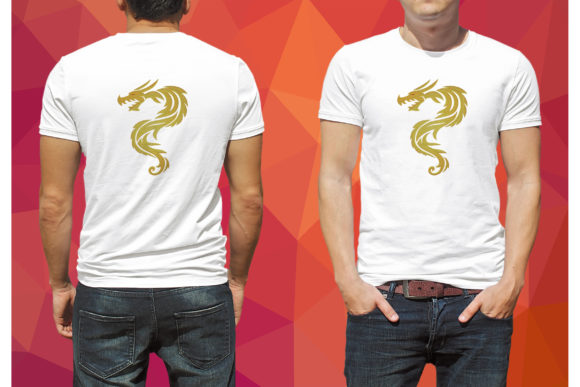
- Custom apparel: Centered on a charcoal crewneck, it read as elevated streetwear—not costume, not cliché.
- Tote bag design: At medium size, it anchored the front panel without pulling or puckering, even after machine washing.
- Pillow covers & nursery decor: Used on a cream linen blend, the gold-toned thread created warmth and texture—perfect for boutique baby gifts (though skip newborn onesies; this motif leans more toward toddler+ or adult gifting).
- Embroidered patch: Hooped cleanly on tear-away stabilizer, then heat-applied to a denim jacket—clean edges, no fraying at claw or flame details.
It also translated well into printable mockups for my Etsy listings. In black-and-white previews, the shape remained legible and distinctive—critical when buyers scroll fast. That visual clarity builds immediate recognition and reinforces brand consistency across digital and physical touchpoints.
Where to Pause—and Plan Ahead
Golden Dragon is strong, but it’s not universally forgiving. Here’s where I slowed down:
- Small hoop sizes: The smallest of the six available sizes still needs at least a 4” x 4” hoop. Don’t force it into a 3” frame—it’ll compromise detail in the eye and scale of the scales.
- Thin or stretchy fabric: On lightweight jersey or rayon challis, I added cutaway + topping stabilizer. Without it, the satin stitch lost definition on curves.
- Dark fabric: Gold thread pops—but only if you choose the right shade. Test metallic or high-sheen polyester gold against your base fabric. Matte gold on navy can disappear; bright gold on black sings.
- Curved surfaces: Caps and beanies? Possible—but only with the largest size and proper cap hoops. Smaller versions risk distortion around the crown seam.
- Frequent-wash items: For kitchen towels or baby blankets, I recommend reinforcing the outer outline with a second pass of running stitch—or switching to a slightly denser fill setting in your embroidery software.
What This Design Says About Your Craft Business
Using Golden Dragon isn’t just about stitching a dragon—it’s about signaling intention. Customers notice when a design feels considered: when scale matches garment proportion, when stitch density supports durability, when color choices honor both fabric and motif. That attention elevates your entire lineup—whether you’re selling embroidered patches on Etsy, custom sweatshirts at craft fairs, or holiday embroidery kits for makers.
I’ve seen small shop owners use Golden Dragon as a signature motif: on aprons for herbalists, tea towels for Asian-inspired bakeries, or limited-run caps for local art festivals. It works because it’s culturally resonant without being prescriptive—open to interpretation, yet unmistakably crafted.
Practical Designer Notes Before You Stitch
Before adding Golden Dragon to your next project or digital product bundle, do these five things:
- Test on scrap fabric first—especially if using textured weaves like waffle cloth or bouclé.
- Check thread color contrast in natural light and under your shop’s display lighting.
- Review stitch density in your embroidery software—if fill areas look overly heavy, reduce density by 5–10% for lightweight fabrics.
- Confirm hoop size compatibility across your machines; the six sizes are helpful, but only if they match your hardware limits.
- Inspect small details closely—the eye, claw tips, and flame ends hold the design’s personality. If those blur or vanish, adjust tension or stabilizer.
Also: since this is a digital embroidery file, verify licensing before listing finished products for sale. Some designers allow commercial use of stitched items but restrict resale of the file itself. When in doubt, reach out to the creator—most reputable embroidery designers respond quickly.
Final Thought: A Design That Grows With You
Golden Dragon isn’t flashy—but it’s memorable. It doesn’t shout; it lingers. That’s rare in the Animals category, where so many embroidery files default to either oversimplified or overwrought. As a machine embroidery design, it rewards patience and precision. As a craft business asset, it adds quiet authority to your portfolio. And as a personalized gift or boutique product? It transforms ordinary fabric into something that feels like heirloom energy—without the price tag.
If you’re choosing between dozens of dragon motifs for your next collection, let this one earn its place—not because it’s trending, but because it stitches true.