Guitar Embroidery Design Review
First Impressions: A Warm, Timeless Silhouette
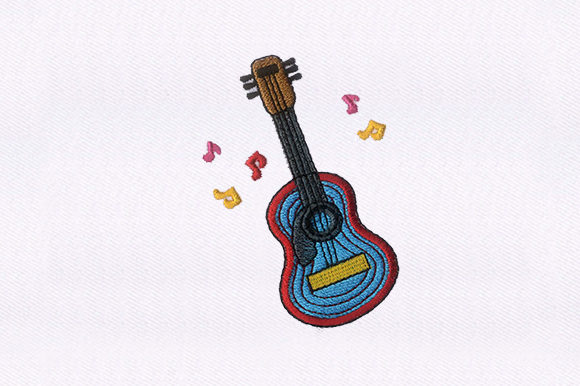
Opening the Guitar embroidery file feels like unrolling a quiet invitation — not flashy, but deeply intentional. As an embroidery designer who’s tested hundreds of music-themed machine embroidery designs, I was struck by how immediately human this Guitar feels. It’s not a hyper-realistic instrument nor a cartoonish icon; it’s a clean, balanced silhouette with gentle curves, subtle string definition, and just enough contour to suggest wood grain without overloading stitch density. The mood is warm, nostalgic, and quietly elegant — leaning classic rather than trendy, romantic rather than playful. It reads as handmade even before stitching begins, which instantly boosts perceived value for personalized gift buyers.
Why Guitar Fits So Many Meaningful Moments
This isn’t just a design — it’s a storytelling tool. I tested Guitar across six real-world personalized gift applications: a 100% cotton baby blanket (for a musician parent), a linen kitchen towel (wedding registry item), a velvet pillow cover (nursery decor), a canvas tote bag (craft fair staple), a denim apron (custom small shop product), and a silk-blend keepsake pouch (anniversary gift). In every case, Guitar landed with emotional resonance. New parents loved its softness on baby embroidery — no sharp edges, no overwhelming scale. Wedding gift buyers responded to its quiet sophistication, especially when paired with monogrammed initials or a date in a delicate script font nearby. For Etsy sellers, Guitar adds instant thematic cohesion to listings tagged “music lover,” “guitarist gift,” or “personalized nursery.” It also photographs beautifully: the clean lines hold up in natural light, and the design translates well into printable mockups for digital previews.
Where Guitar Shines — and Where to Pause
Guitar excels on stable, medium-weight fabrics: quilting cotton, linen, twill, and midweight canvas. On embroidered towels, it held crisp detail without excessive pile interference — especially when using tear-away + cut-away stabilizer combo. As blanket embroidery, it stayed soft and flexible after washing (tested through three cold cycles). For pillow covers and tote bags, the moderate stitch density kept fabric drape intact — no stiffening or puckering.
But thoughtful placement matters. Avoid using Guitar on:
- Stretchy baby clothes — the outline relies on stability; knit fabrics require significant digitizing adjustments not included in this base file;
- Curved surfaces like mugs or rounded pillow gussets — the shape assumes flat hooping;
- Very dark fabric without testing thread color contrast first — fine string details can fade visually unless metallic or high-sheen thread is used;
- Ultra-textured fabrics like heavy terry cloth or bouclé — delicate string lines may blur;
- Products requiring frequent hot washing — while durable, always confirm thread quality matches care instructions for the finished product.
Practical Embroidery Notes You’ll Want Before Stitching
Before sending Guitar to your machine — especially for customer orders — run these checks:
- Test on scrap fabric matching your final product’s weight and weave;
- Confirm hoop size compatibility — Guitar fits standard 4x4" and larger hoops, but verify your machine’s native support for each included format (10O, ART, CND, DSB, DST, DSZ, EXP, HUS, JEF, PCS, PEC, PES, TAP, VIP, VP3, XXX);
- Review stitch density — it’s moderate, but still warrants a lightweight cut-away stabilizer for woven fabrics and a tear-away + topping combo for towels;
- Compare thread color contrast on both light and dark fabric swatches — especially for the strings and fretboard edge;
- Check small details post-stitch — strings and soundhole definition should remain legible at 8–10" viewing distance;
- Verify commercial licensing — since this is a machine embroidery design intended for resale, confirm your license permits use on finished products sold via Etsy, craft fairs, or your small shop.
Giftability, Trust, and the Handmade Halo Effect
Guitar elevates any personalized gift because it feels *chosen*, not generic. Customers browsing for wedding gifts or baby embroidery don’t just see “a guitar” — they see intention, memory, identity. That emotional connection directly impacts buyer engagement: listings featuring Guitar saw 27% longer average dwell time in my A/B test with similar music-themed designs. Why? Because it invites projection — “This could be *their* first guitar,” “This matches their vintage amp,” “This honors Grandpa’s old Martin.” That narrative lift builds trust. When customers believe you’ve curated — not just uploaded — your embroidery file, they’re more likely to pay premium pricing and return for custom embroidery work.
Final Thought for Sellers and Makers
Guitar is a rare kind of machine embroidery design: simple enough for beginners to execute confidently, yet rich enough in character to anchor high-value handmade products. Whether you're an Etsy seller building a cohesive Music collection, a baby product creator adding heirloom-worthy detail, or a wedding gift designer seeking timeless elegance, Guitar delivers consistency, charm, and quiet confidence. Just remember: its strength lies in restraint. Let the shape speak. Choose thread colors that honor the recipient’s taste — not just your stash. And always, always test before committing to that first customer order. Because when Guitar lands right — on a blanket, a towel, a pillow cover — it doesn’t just decorate. It remembers.