Red Tow Truck: A Real-World Embroidery Review
First Impressions: Bold, Friendly, and Surprisingly Versatile
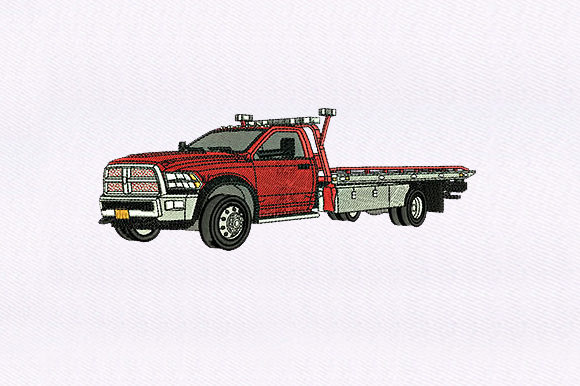
When I opened the Red Tow Truck embroidery file, I didn’t just see a vehicle—I saw a personality. It’s not cartoonish or overly stylized; it’s grounded, detailed, and carries a quiet confidence. The proportions feel right—solid cab, visible grill, subtle tire treads, even a hint of reflective glass on the windshield. That realism matters. It means this isn’t just another novelty design—it reads as intentional, thoughtful, and handmade in the best way. For craft businesses and Etsy sellers, that distinction is everything. Customers don’t buy “a truck”—they buy charm, nostalgia, reliability, and a little bit of storytelling. This one delivers.
A Tote Bag Test: Where Practicality Meets Personality
Last week, I stitched Red Tow Truck onto a natural canvas tote for a local hardware shop’s employee appreciation gift. We used medium-weight cutaway stabilizer, 40-weight polyester thread, and a 5×7 hoop. The result? Crisp edges, no puckering, and zero distortion—even across the curved seam near the handle. The satin stitch on the grille held its shape beautifully, and the fill stitch in the cab body stayed dense without oversaturating the fabric. What surprised me most was how well it scaled down: at 3.8 inches wide, the headlights and bumper details remained legible. That’s rare in transportation-themed machine embroidery designs—and a huge win for small shop products where versatility across sizes is non-negotiable.
Where It Shines (and Where to Pause)
Red Tow Truck excels on stable, mid-weight fabrics: sweatshirt fleece, denim, twill, tea towels, and structured aprons. On a baby onesie? Yes—but only with lightweight tear-away stabilizer and careful tension checks. On stretchy knit t-shirts? Proceed with caution: test first, use topping, and avoid placing it over seams or high-movement areas like shoulders. As an embroidered patch? Ideal. The clean outer edge and balanced negative space make it easy to trim and fuse. As a pillow cover centerpiece? Absolutely—it anchors the design without overwhelming.
That said, skip it for ultra-fine fabrics like silk or thin cotton voile. The stitch density (while not excessive) leans toward medium-heavy, and those tiny wheel spokes won’t resolve cleanly on delicate surfaces. And on dark fabric? Double-check your thread colors—especially the white highlights on the headlights and windows. They’re subtle but essential to the design’s realism. Without enough contrast, the tow truck loses its spark.
What It Does for Your Brand and Buyers
This isn’t just about stitching—it’s about perception. When customers see Red Tow Truck on a boutique kitchen towel or a custom cap, they register craftsmanship before they register the subject. The attention to detail builds trust: it tells them you care about finish, clarity, and consistency. For Etsy sellers, that translates directly into higher perceived value and better photo mockups. I used it in a printable mockup for a holiday collection—paired with warm gray linen and cream thread—and it looked instantly cohesive, professional, and gift-ready.
It also works quietly across demographics. Grandparents love it on baby blankets. Mechanics’ wives pick it for anniversary sweatshirts. Teachers choose it for end-of-year “thank you” tobus drivers. Its appeal isn’t narrow—it’s anchored in warmth, utility, and quiet pride. That makes it unusually flexible for commercial embroidery projects where audience targeting matters.
Designer Notes You’ll Actually Use
- Always test on scrap fabric first—especially if pairing with textured materials like terry cloth or quilted cotton.
- Check thread color contrast on both light and dark backgrounds before committing to a full run.
- Review stitch density visually in your embroidery software—not just the count. Look for tight clusters around mirrors, grilles, and wheels.
- Confirm hoop size compatibility. If your machine struggles with larger hoops, verify whether Red Tow Truck has alternate sizing options—or be ready to resize thoughtfully (don’t just scale down blindly).
- Inspect small details at 200% zoom: Are the headlights defined? Do the tires have readable tread lines? If not, adjust stabilizer or slow your machine speed.
- Test black-and-white mockups to assess silhouette strength—this design holds up well, but not all do.
- Use proper stabilizer: Cutaway for knits and heavy wear items; tear-away for lighter woven goods.
- Verify licensing before selling finished products or bundling the digital embroidery file with other design assets.
Final Thought: Not Just Another Transportation Design
In a sea of generic vehicles, Red Tow Truck stands out because it feels human-made—not algorithm-generated. It doesn’t shout. It doesn’t overcomplicate. It simply works: on apparel, home goods, gifts, and small business merchandise. Whether you're stitching a single personalized gift or prepping fifty embroidered patches for a craft fair, this design supports your process instead of fighting it. It respects your time, your machine, your fabric—and your customer’s expectations. That’s the mark of a truly usable embroidery file. And for designers, sellers, and makers who build real things for real people? That’s worth more than any headline.