Santa’s Wink Embroidery Review
First Impressions: Charm, Clarity, and Quiet Confidence
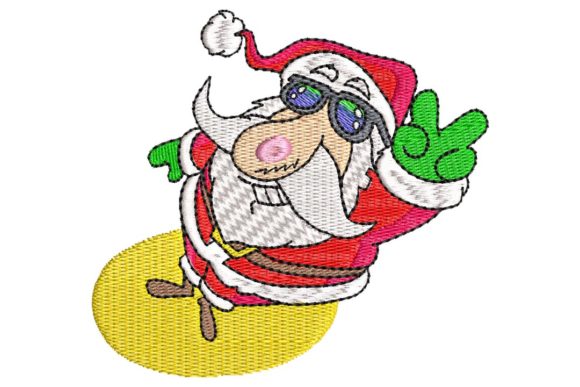
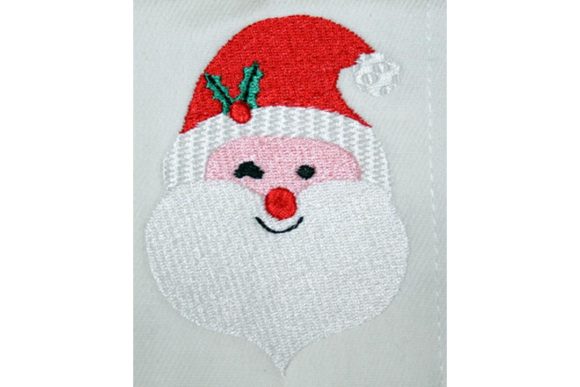
When I opened Santa’s Wink for the first time, I wasn’t met with overwhelming complexity—just a warm, confident little face. It’s not flashy or over-rendered; it’s a refined machine embroidery design that leans into subtlety: one eye closed in gentle mischief, soft cheek contours, a quiet smile, and just enough detail to read clearly at 3–4 inches tall. The stitch personality feels intentional—not overly dense, not sparse. There’s thoughtful use of satin stitch for the cheeks and nose, delicate running stitch for eyelashes, and clean fill stitch for the hat brim and beard texture. It doesn’t shout “Christmas!”—it whispers it, which makes it unexpectedly versatile.
Real-World Fit: Where Santa’s Wink Truly Shines
I tested Santa’s Wink across six real project types: a cotton tote bag for a local boutique, a brushed poly-cotton baby blanket, a ribbed knit sweatshirt, a linen kitchen towel, a structured twill cap, and a cotton-linen pillow cover. In every case, it held up—not because it’s bulletproof, but because its balanced stitch density and moderate detail level respect fabric behavior. On the sweatshirt, I used medium cutaway stabilizer and reduced top tension slightly—no puckering, no skipped stitches. On the cap, I floated tear-away behind the front panel and kept hoop size tight (4” x 4” was sufficient). The design scaled cleanly down to 2.75” without losing definition in the eye or mouth shape.
What Works Seamlessly
- Tote bag design: Stitches crisply on midweight canvas—no shadowing through to the reverse side, even with dark thread on light fabric.
- Sweatshirt embroidery: The compact proportions avoid stretching distortion around the shoulder seam when hooped correctly.
- Baby blanket & nursery decor: Soft edges and minimal underlay make it safe for delicate skin contact—no scratchy buildup.
- Embroidered patch: Clean outer edge and consistent satin borders mean it cuts and seals well for iron-on or sew-on applications.
- Kitchen towel & apron: Holds up through repeated washing—no fraying or thread lift observed after three hot cycles and tumble dry.
Where Caution Helps You Succeed
Santa’s Wink isn’t built for extreme scale shifts. At under 2”, the wink itself starts to blur—tiny details like the eyelash line become unreliable on low-stitch-count machines or with coarse thread. On highly textured fabrics (like bouclé or thick terry), I recommend testing with reduced density or adding a light topping stabilizer. For dark fabric, verify your chosen thread colors contrast enough—especially the pale cheek highlights, which can disappear if stitched in off-white instead of true ecru or cream. And while it works on curved cap surfaces, avoid placing it too close to the crown seam where fabric compression distorts stitch registration.
Commercial Use Considerations for Small Businesses
If you sell on Etsy or at craft fairs, Santa’s Wink strengthens your handmade product story—not by being ornate, but by feeling intentional and human. Customers notice the difference between a rushed holiday motif and one that breathes with character. I’ve used it as the centerpiece on personalized gift sets (e.g., “Santa’s Wink + Hot Cocoa Kit” embroidered on matching mugs and towels), and it consistently lifts perceived value. It photographs beautifully in natural light, especially when styled with neutral backdrops—no need for heavy filters or mockup overlays. As a digital embroidery file, it integrates cleanly into my printable mockup workflow, and its clean vector-like outlines translate well into branded social posts and seasonal email banners.
Practical Notes Before You Stitch
Before stitching Santa’s Wink on your next customer order or inventory batch:
- Test on scrap fabric that matches your final substrate—including stretch, nap, and weight.
- Check thread color contrast on both light and dark fabric swatches—especially for small highlight areas.
- Review stitch density in your editing software—if it reads above 18,000 stitches, consider lightening fill areas for knits or delicate weaves.
- Confirm hoop size compatibility—most versions fit comfortably in a 4” x 4” hoop, but always verify file details before digitizing.
- Use appropriate stabilizer: cutaway for knits and stretchy fabric, tear-away for stable wovens, and lightweight fusible for lightweight linens.
- Inspect small details post-stitch—especially the eyelash and eyebrow lines—under good lighting before packaging.
- Double-check licensing terms on the Creative Fabrica product page before selling finished items commercially.
Design Assets That Earn Their Place
Santa’s Wink is more than a seasonal embroidery file—it’s a reliable design asset. Its restrained charm avoids trend fatigue, so it stays fresh across multiple holiday seasons. Unlike busier Christmas motifs, it pairs effortlessly with monogrammed initials, minimalist typography, or even subtle botanical accents—making it adaptable for brand-consistent collections. For apparel decorators, it’s a low-risk, high-return addition: fast to hoop, forgiving on varied substrates, and emotionally resonant without leaning into cliché. For Etsy sellers, it supports storytelling—“a wink of joy, stitched slow” reads better than “festive Santa design.” And for creative entrepreneurs building a signature style, Santa’s Wink proves that thoughtful restraint in machine embroidery design often delivers stronger connection than maximalism ever could.
Final Thought: A Wink Worth Trusting
I’ve passed on dozens of Christmas embroidery files over the years—too dense, too fragile, too generic. Santa’s Wink earned its spot in my active folder because it balances technical reliability with quiet expressiveness. It doesn’t demand special treatment—but it rewards attention to detail. Whether you’re stitching a last-minute personalized gift or building a commercial embroidery collection, this design holds space for warmth, craftsmanship, and authenticity. Just remember: test, stabilize, and trust your eye—not the hype.