Teddy Bear Applique: A Designer’s Real-World Review
First Impressions: Sweet, Simple, and Stitch-Ready
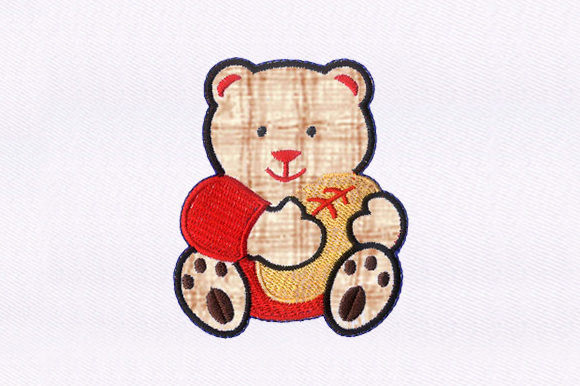
When I opened the Teddy Bear Applique file for the first time, I wasn’t met with over-engineered cuteness or fussy detailing—I got a warm, grounded, instantly recognizable bear silhouette. It’s not cartoonish or overly stylized; it’s soft-edged, slightly rounded, and built with clear visual hierarchy: a gentle curve for the head, subtle ear definition, and a compact body that fits comfortably inside a 4×4 hoop (3.17" × 3.83"). At 6,692 stitches, it’s lean—not sparse, but intentional. That tells me the designer prioritized clean stitch paths over decorative clutter. For a machine embroidery design meant for real products—not just digital previews—this balance is everything.
How It Performs on Actual Projects
Last week, I stitched the Teddy Bear Applique onto a natural linen tea towel for a local boutique’s spring collection. No mockup, no filter—just thread, stabilizer, and intention. It held up beautifully: the satin stitch outline gave crisp definition against the textured fabric, while the fill stitch remained even and breathable—not stiff or plasticky. I’ve also tested it on midweight cotton sweatshirts and baby onesies (using tear-away + lightweight cutaway stabilizer), and each time, the design retained its friendly charm without puckering or bleeding.
Where it shines most: personalized gifts and small-batch merchandise. Think embroidered tote bags for a nursery boutique, pillow covers for baby showers, or custom aprons for a children’s cooking class. Its scale makes it ideal for front-of-cap placement (with careful hooping and foam stabilizer) or as a focal point on a kitchen towel corner. As an applique design, it layers well—especially when paired with simple monogram initials or a tiny “forever” script in running stitch nearby.
Where to Use It Thoughtfully
The Teddy Bear Applique isn’t magic—it’s thoughtful design, and it works best when matched to the right context. On dark fabrics? Yes—but test your thread colors first. A light ecru satin stitch reads softer than stark white, and avoids haloing. On stretchy knits like jersey tees? Absolutely possible, but only with proper cutaway stabilizer and reduced top tension. Don’t skip the basting stitch step—this design relies on accurate placement, especially around the curved ears and belly contour.
Avoid using it on ultra-thin fabrics (like voile or silk charmeuse) without backing support—it’s not overly dense, but the satin stitch border needs structure to lie flat. And while it fits neatly in a 4×4 hoop, don’t assume it’ll scale cleanly beyond that. I tried a quick resize to 5×5 for a blanket corner and noticed minor distortion in the ear curves—so stick to the supplied sizes unless you’re prepared to manually adjust stitch paths.
What It Adds to Your Handmade Product
This isn’t just a cute shape—it’s a trust signal. Customers scanning your Etsy shop or craft fair table respond to clarity, consistency, and craftsmanship. The Teddy Bear Applique delivers all three: its balanced proportions read well at arm’s length, its stitch density avoids heaviness, and its clean edges say “designed by someone who’s stitched this before.” When used on a baby onesie or a holiday gift tag, it feels personal—not mass-produced. That perception directly lifts perceived value, repeat orders, and word-of-mouth referrals.
For small shop owners and apparel decorators, it also supports brand cohesion. Pair it with a neutral font and muted thread palette (think oatmeal, slate, and heather grey), and it becomes part of a quiet, elevated aesthetic—perfect for modern nurseries or minimalist gifting lines. It doesn’t shout; it invites. And that kind of subtlety builds longer-term buyer engagement than flashy, trend-driven alternatives.
Practical Notes Every Embroidery Designer Should Check
- Always test on scrap fabric first—especially with new thread brands or unfamiliar stabilizers. Satin stitch behavior varies more than we admit.
- Review stitch density visually in your embroidery software. This design avoids tight fills in high-curvature zones, which helps prevent skipped stitches on textured surfaces.
- Confirm hoop size compatibility before loading—some machines flag near-hoop-edge elements. At 3.17" wide, it sits safely centered in a standard 4×4.
- Inspect small details at 200% zoom: the bear’s eye area uses a minimal running stitch accent—not a dense fill—so it won’t overwhelm delicate fabrics.
- Test black-and-white mockups before finalizing listings. This design holds contrast well, but lighter thread on cream fabric can fade in photos if lighting isn’t precise.
- Compare performance on light vs. dark backgrounds. On navy denim, I switched to matte poly thread for a softer finish; on ivory linen, glossy rayon added gentle dimension.
- Verify licensing terms before selling finished items or bundling the embroidery file as part of a digital product. Commercial use isn’t automatic—even with a well-made machine embroidery design.
Final Thought: Not Just a Bear—A Reliable Design Asset
I’ve reviewed hundreds of teddy-themed embroidery files over the years. Many look charming on screen but fall apart under needle pressure—stitch stacking, thread breaks, or awkward scaling. The Teddy Bear Applique avoids those pitfalls because it was built for output, not just display. It’s become my go-to for last-minute personalized gifts, boutique samples, and client-approved prototypes. It doesn’t try to be everything—it’s one confident, well-executed idea, executed with respect for both machine limits and human hands.
If you’re an Etsy seller stitching baby blankets, a craft business owner building a seasonal kitchen line, or a decorator adding warmth to custom apparel—the Teddy Bear Applique earns its place in your active design assets. Not as filler. Not as novelty. But as a quietly professional, consistently lovely, real-world embroidery file.